
Food & wine
Espelette pepper: history, cultivation and 5 iconic recipes
All about PDO Espelette pepper: origins, growing area, drying, how it differs from paprika, how to spot the real thing, plus 5 Basque recipes.
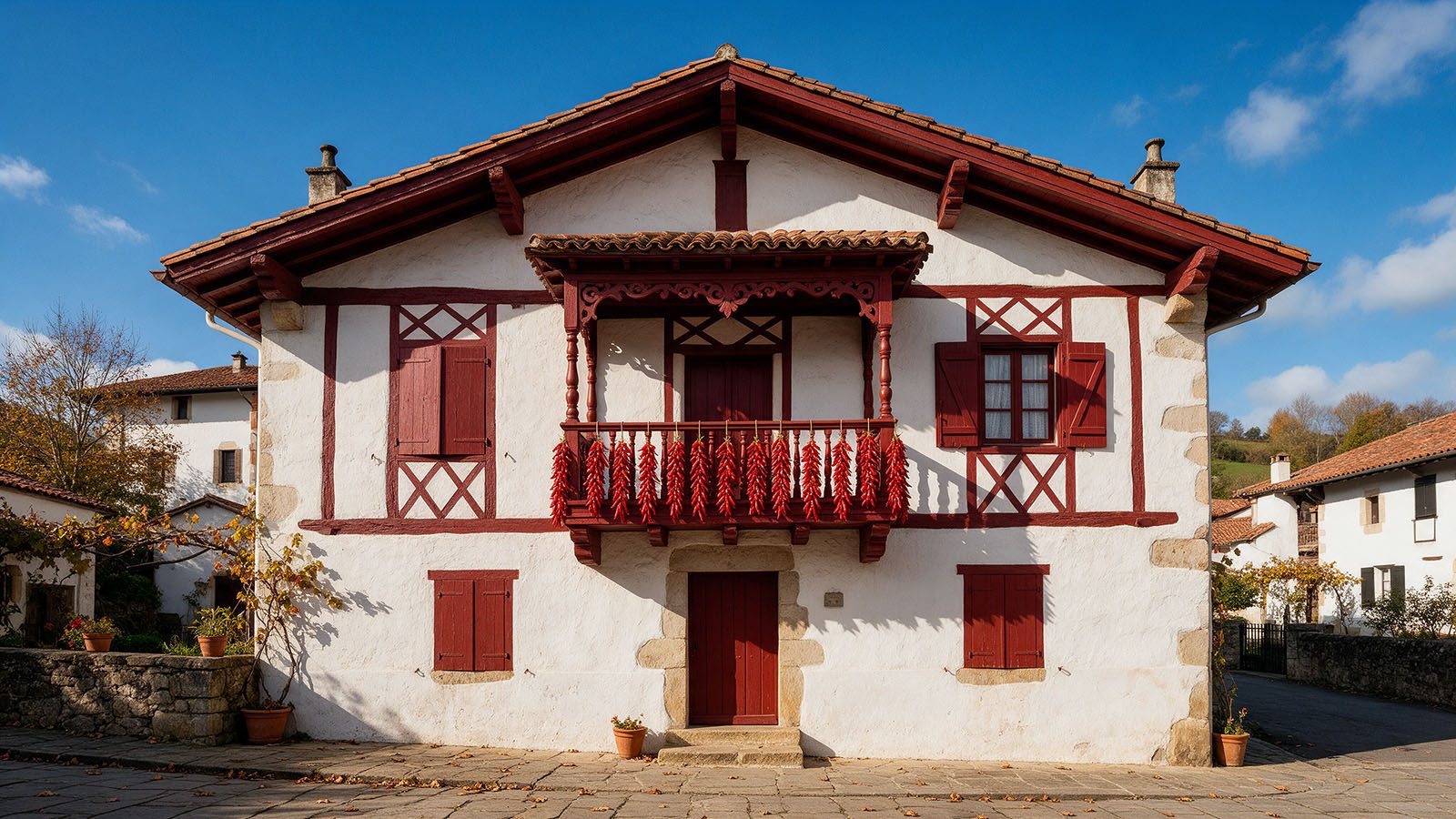
It is the visual emblem of the whole Basque Country (those house fronts hung with strings of red peppers at the end of summer), and the only French spice with a designation of origin. Espelette pepper has a long story to tell — from a plant that came from the Americas to a condiment protected by a European PDO.
A complete guide: origins, growing area, how it differs from other peppers, where to buy the real thing, and 5 Basque recipes.
An American story that became Basque
The chilli pepper (Capsicum annuum) was domesticated in Mexico. It was introduced to Europe after the voyages of Christopher Columbus and reached the Basque Country in the 16th century; according to the municipality, its cultivation in Espelette (Ezpeleta in Basque) goes back to 1650.
The local variety, gorria, is the reference variety for the designation. Its heat is moderate: this is a pepper for flavour rather than fire.
For a long time it was grown for local use, and in particular it took the place of black pepper, which was imported and expensive — hence its nickname, ‘poor man’s pepper’.
2000: recognised as an AOC (appellation d’origine contrôlée), followed by the European PDO (Protected Designation of Origin, AOP in French) in 2002.
The growing area: 10 municipalities
The PDO covers 10 municipalities in Labourd (Lapurdi):
Espelette (Ezpeleta), Ainhoa, Cambo-les-Bains (Kanbo), Halsou (Haltsu), Itxassou (Itsasu), Jatxou (Jatsu), Larressore (Larresoro), Saint-Pée-sur-Nivelle (Senpere), Souraïde (Zuraide), Ustaritz (Uztaritze).
In 2022, the sector had around 200 growers and 296 hectares under cultivation, according to the French Ministry of Agriculture.
From planting to powder
The main stages, according to the PDO specification:
- Planting: in open ground, between 1 April and 15 July
- Harvest: by hand, in successive pickings, taking only ripe red peppers, until the first frosts and 1 December at the latest
- Ripening: at least 15 days in a warm, well-ventilated room — this is when you see the strings of peppers, threaded by hand and hung up, on house fronts in particular
- Drying: oven-dried once ripening is complete, then ground into powder
How to spot the real thing
Genuine PDO Espelette pepper carries:
- The European PDO logo (red and yellow) on the label
- The words ‘Piment d’Espelette’ (or ‘Piment d’Espelette - Ezpeletako Biperra’) in clearly visible lettering
- A powder that ranges from orange to reddish brown
Note: the name ‘piment d’Espelette’ is protected by the designation of origin.
Espelette pepper vs paprika vs cayenne pepper
| Espelette | Sweet paprika | Cayenne | |
|---|---|---|---|
| Origin | French Basque Country (PDO) | Mainly Hungary and Spain | — |
| Heat (Scoville scale) | up to 4,000 SHU | low, variable | 30,000–50,000 SHU for most varieties |
| Notes | Fruity, warm, rounded | Mild, sweet | Fiery, dry |
| Use | Replaces black pepper | Colour | Use sparingly |
Espelette pepper is much milder than cayenne. It is a pepper you enjoy for its flavour, not its burn.
Where to buy real Espelette pepper
PDO Espelette pepper is available all year round from growers in the municipalities of the designation area, at markets, in delicatessens and in supermarkets. Just check for the PDO logo.
5 Basque recipes
1. Traditional piperade
A classic of Basque cooking.
Ingredients (serves 4):
- 6 green peppers (a sweet variety), sliced
- 4 ripe tomatoes, deseeded
- 1 brown onion, sliced
- 2 garlic cloves
- 4 eggs
- 1 level teaspoon of Espelette pepper
- 4 slices of Bayonne ham
- Olive oil, salt
Method:
- Sweat the onion and garlic for 5 min over a low heat
- Add the peppers and cook, covered, for 15 min
- Add the tomatoes, salt and Espelette pepper. Cook for 5 min
- Break the eggs into the pan and stir gently
- Serve with Bayonne ham, fried separately for 30 seconds
2. Veal axoa
Chopped veal with sweet peppers and Espelette pepper.
Ingredients: 800 g shoulder of veal, 4 sweet green peppers, 2 sweet red peppers (Basque sweet pepper), 2 onions, 3 garlic cloves, 1 teaspoon of Espelette pepper, olive oil.
Brown the chopped veal, add the onions, garlic and peppers, and cook, covered, for 1 hr. Add the Espelette pepper 10 min before the end. Serve with steamed potatoes.
3. Tuna marmitako
The Basque fishermen’s stew.
Cubed tuna, potatoes, peppers, tomato, onion, 1/2 teaspoon of Espelette pepper. Simmer for 30 min. Serve with bread.
4. Espelette pepper crème brûlée
A twist on crème brûlée: a pinch of Espelette pepper in the cream before caramelising. The result: a sweet-and-spicy contrast.
5. Espelette pepper chocolate
At home: melt 200 g of 70% dark chocolate with 100 ml of cream and 1/4 teaspoon of Espelette pepper. Pour into a bar mould and leave to set for 2 hrs. Serve with a coffee.
The Fête du Piment — last weekend of October
Held since the late 1960s, the Fête du Piment (the Espelette pepper festival) draws tens of thousands of visitors every year to Espelette (population around 2,150). On the programme: a market of growers and regional produce, Basque dancing, a solemn mass with the blessing of the peppers, a procession and the induction of new members into the pepper brotherhood (Confrérie du piment).
My favourite photo
Late September in Espelette, when the house fronts are covered with strings of peppers. The low morning light makes the red glow. Frame tightly on a single façade, with the peppers in the foreground.
Bihar arte — See you tomorrow.