
Culture
How to pronounce Basque place names — a mini-guide for visitors
Bilbao, Donostia, Iruñea, Baiona… A practical guide to pronouncing some thirty essential Basque place names, with simple rules and easy English sound-alikes.
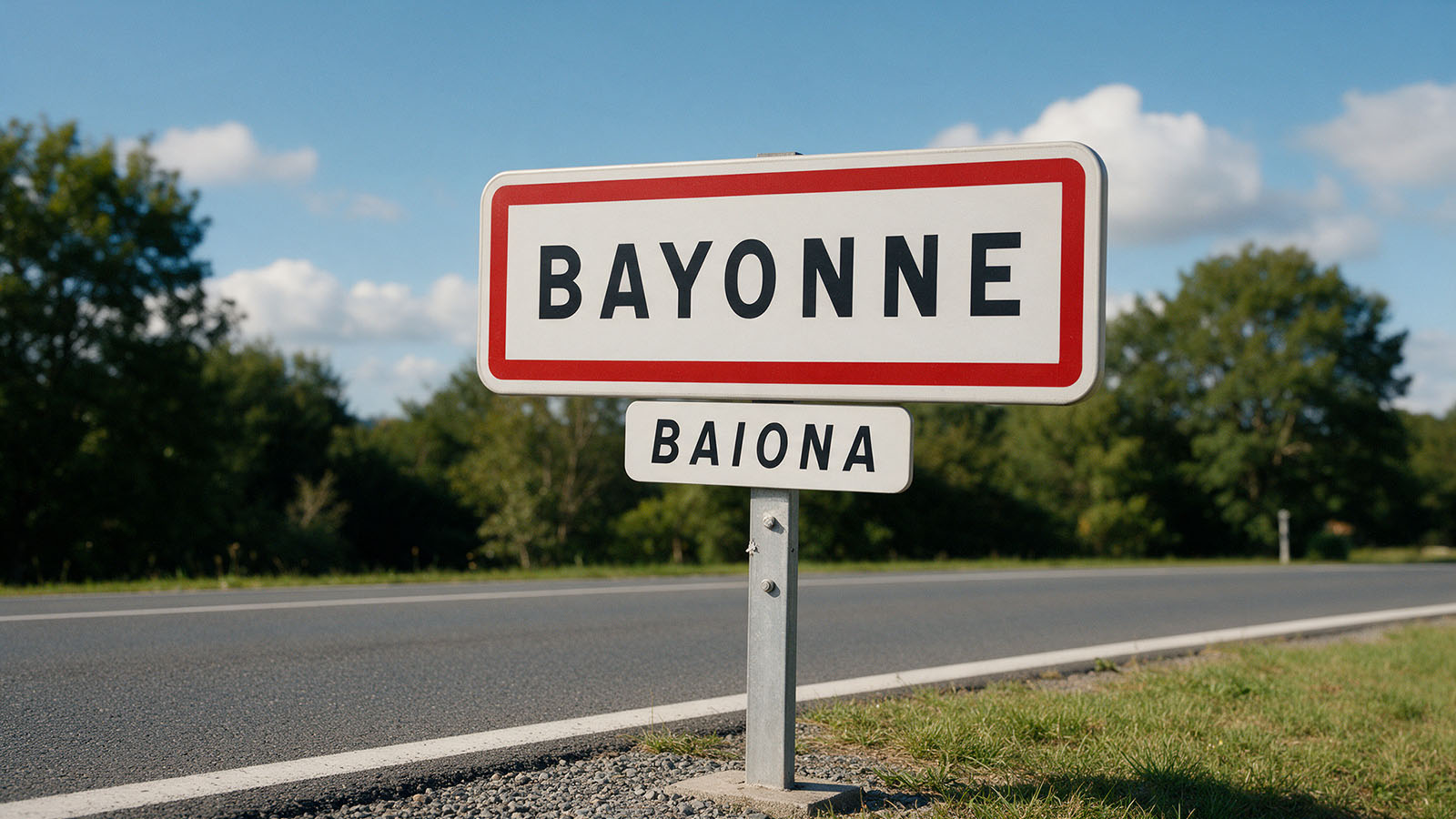
Pronouncing Basque place names properly is a thoughtful touch that people appreciate. The good news: Basque (euskara) has simple pronunciation rules, more regular than English spelling.
The 7 basic rules to remember
One bonus rule: Basque spelling is very regular. Apart from H, there are no silent letters: every letter you see is pronounced.
Vowels
As in Spanish, A, E, I, O, U are always pronounced the same way.
- A: an open ‘ah’ (like the ‘a’ in ‘father’, but short)
- E: ‘eh’ (as in ‘bed’), never ‘ee’
- I: ‘ee’ (as in ‘see’, but short)
- O: ‘o’ (as in ‘hot’)
- U: ‘oo’ (as in ‘food’, but short). ⚠️ Never ‘yoo’ as in ‘use’.
Watch out for diphthongs (ai, ei, oi, ui, au, eu), which are pronounced in a single glide: Baiona = ‘bye-oh-nah’, Maule = ‘mow-leh’ (‘mow’ rhyming with ‘cow’).
Essential place names
Cities and towns
| Written | Pronunciation | English name |
|---|---|---|
| Bilbao | Bil-bah-oh | Bilbao |
| Donostia | Doh-nos-tee-ah | San Sebastián |
| Iruñea | Ee-roo-nyeh-ah | Pamplona |
| Gasteiz | Gas-tayss | Vitoria |
| Baiona | Bye-oh-nah | Bayonne |
| Donibane Lohizune | Doh-nee-bah-neh Loh-ee-soo-neh | Saint-Jean-de-Luz |
| Donibane Garazi | Doh-nee-bah-neh Gah-rah-see | Saint-Jean-Pied-de-Port |
| Maule | Mow-leh | Mauléon-Licharre |
Provinces
| Written | Pronunciation | In English |
|---|---|---|
| Bizkaia | Bis-kah-yah | Biscay |
| Gipuzkoa | Ghee-pooss-koh-ah (hard g, as in ‘get’) | Gipuzkoa |
| Araba | Ah-rah-bah | Álava |
| Nafarroa | Nah-fah-rroh-ah (rolled r) | Navarre |
| Lapurdi | Lah-poor-dee | Labourd |
| Nafarroa Beherea | Nah-fah-rroh-ah Beh-eh-reh-ah | Lower Navarre |
| Zuberoa | Soo-beh-roh-ah | Soule |
Iconic villages
| Written | Pronunciation | Where |
|---|---|---|
| Ezpeleta | Es-peh-leh-tah | Espelette (Labourd) |
| Sara | Sah-rah | Sare (Labourd) |
| Gernika | Gehr-nee-kah (hard g) | Guernica (Biscay) |
| Getxo | Geh-choh | Getxo (Biscay) |
| Getaria | Geh-tah-ree-ah | Getaria (Gipuzkoa) |
| Zumaia | Soo-mah-yah | Zumaia (Gipuzkoa) |
| Hondarribia | On-dah-rree-bee-ah | Hondarribia |
| Zarautz | Sah-rowts | Zarautz (Gipuzkoa) |
| Laguardia | Lah-gwar-dee-ah | Laguardia (Álava) |
| Tudela | Too-deh-lah | Tudela (Navarre) |
| Olite | Oh-lee-teh | Olite (Navarre) |
| Elizondo | Eh-lee-son-doh | Elizondo (Navarre) |
| Zugarramurdi | Soo-gah-rrah-moor-dee | Zugarramurdi |
Common mistakes and how to avoid them
Mistake 1 — Mangling the ‘Z’
The Basque Z is pronounced like an S, never like an English ‘z’ (as in ‘zoo’). Zumaia = ‘Soo-mah-yah’. Zarautz = ‘Sah-rowts’.
Mistake 2 — Getting ‘TX’ wrong
Txakoli isn’t ‘tsakoli’ or ‘tzakoli’ — it’s ‘Chah-koh-lee’, with a ‘ch’ as in cheque.
Mistake 3 — Forgetting that ‘H’ is sometimes aspirated in northern Basque
In the dialects of Iparralde (the French side), H is traditionally aspirated (breathed, as in English). On the Spanish side, it is silent.
Mistake 4 — Rolling every R
A single R between vowels isn’t rolled. Nafarroa has a double R = strongly rolled. Baiona has a single R = light.
Bonus: a few Basque first names
- Aitor: Eye-tor (legendary ancestor of the Basques)
- Nerea: Neh-reh-ah (mine)
- Amaia: Ah-mah-yah (end)
- Iñaki: Ee-nyah-kee (Ignatius)
- Maialen: Mah-yah-len (Magdalene)
- Peio: Peh-yoh (Peter)
- Xabier: Shah-bee-ehr (Xavier)
- Ekaitz: Eh-kites (storm)
Why it’s worth making the effort
Three practical reasons:
-
You’ll be better understood. A Basque speaker understands ‘Doh-nos-tee-ah’ straight away, whereas ‘Donostia’ with a Parisian accent often takes two attempts.
-
You’ll get a warmer welcome. Making the effort to pronounce things properly is a sign of respect. It changes the waiter’s smile, the help you get from passers-by, the welcome at your hotel.
-
You’re taking part in something bigger. Basque is a living language — more than 680,000 speakers aged 16 and over in the Basque Autonomous Community alone (2021) — but a fragile one. Every visitor who uses it correctly, even just a few words, helps keep it alive.
A last word in Basque
Milesker (mee-less-kehr) — thanks. Eskerrik asko (ess-keh-rreek ahs-koh) — thank you very much. Kaixo (kye-shoh) — hi. Agur (ah-goor) — goodbye.
You’re all set.
Ongi etorri Euskal Herrira — Welcome to the Basque Country.